Filters
Question type

Study Flashcards

Three charges are brought from infinity and placed at the corner of an equilateral triangle.Which of the following statements is true?


A) The work required to assemble the charges is always positive.
B) The electrostatic potential energy of the system is always positive.
C) The electrostatic potential energy does not depend on the order the charges are placed at the corners.
D) The work required to assemble the charges depends on which charge is placed at which corner.
E) The electrostatic potential energy depends on which charge is placed at which corner.

F) D) and E)
G) A) and B)

Correct Answer

verifed

verified

Use the following to answer the next question. Use the following to answer the next question.   -The electrostatic potential energy of a positively charged body is greatest at point _____. A) A B) B C) C D) D E) E -The electrostatic potential energy of a positively charged body is greatest at point _____.


A) A
B) B
C) C
D) D
E) E

F) B) and D)
G) A) and D)

Correct Answer

verifed

verified

A solid spherical conductor of radius 15 cm has a charge Q = 6.5 nC on it.A second,initially uncharged,spherical conductor of radius 10 cm is moved toward the first until they touch and is then moved far away from it.How much charge is there on the second sphere after the two spheres have been separated?


A) 2.6 nC
B) 2.2 nC
C) 3.2 nC
D) 3.9 nC
E) 4.3 nC

F) None of the above
G) A) and C)

Correct Answer

verifed

verified

A solid spherical conductor of radius 20 cm has a charge Q = 25 nC on it.A second,initially uncharged,spherical conductor of radius 12 cm is moved toward the first until they touch and is then moved far away from it.How much charge is there on the second sphere after the two spheres have been separated?


A) 15 nC
B) 9.4 nC
C) 25 nC
D) 3.9 nC
E) 2.1 nC

F) A) and E)
G) A) and B)

Correct Answer

verifed

verified

An electric dipole that has a positive charge of 4.8 × 10⁻¹⁹ C is separated from a negative charge of the same magnitude by 6.4 × 10⁻¹⁰ m.The electric potential at a point 9.2 × 10⁻¹⁰ m from each of the two charges is


A) 9.4 V
B) zero
C) 4.2 V
D) 5.1 × 10⁹ V
E) 1.7 V

F) B) and D)
G) A) and C)

Correct Answer

verifed

verified

The potential of a spherical shell carrying 6.0 C of charge is 540 kV.What is the radius of the shell?


A) 1.0 101 m
B) 1.0 102 m
C) 3.2 10-1 m
D) 1.0 10-1 m
E) none of the above

F) B) and C)
G) A) and D)

Correct Answer

verifed

verified

Which of the following statements regarding potential is true?


A) The units of potential are N/C.
B) Potential is a vector quantity.
C) Equipotential surfaces are at right angles to lines of force.
D) Potential differences can be measured directly with a ballistic galvanometer.
E) Equipotential surfaces for an isolated point charge are cubes concentric with the charge.

F) B) and E)
G) A) and B)

Correct Answer

verifed

verified

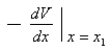
The electric potential is known to be a function of x only; i.e.,v = V(x) .The electric field at a position x1 is given by


A) V(x1)
B) The electric potential is known to be a function of x only; i.e.,v = V(x) .The electric field at a position x<sub>1</sub> is given by A) V(x<sub>1</sub>)  B)    C)    D)    E)
C) The electric potential is known to be a function of x only; i.e.,v = V(x) .The electric field at a position x<sub>1</sub> is given by A) V(x<sub>1</sub>)  B)    C)    D)    E)
D) The electric potential is known to be a function of x only; i.e.,v = V(x) .The electric field at a position x<sub>1</sub> is given by A) V(x<sub>1</sub>)  B)    C)    D)    E)
E) The electric potential is known to be a function of x only; i.e.,v = V(x) .The electric field at a position x<sub>1</sub> is given by A) V(x<sub>1</sub>)  B)    C)    D)    E)

F) B) and E)
G) A) and B)

Correct Answer

verifed

verified

Use the following figure to answer the next problem: Use the following figure to answer the next  problem:   Two equal positive charges are placed x m apart.The equipotential lines are at 100 V interval. -The work required to move a third charge,q = <font face= symbol ></font>e,from the <font face= symbol ></font>100 V line to b is A) <font face= symbol ></font>100 eV B) <font face= symbol ></font>100 eV C) <font face= symbol ></font>200 eV D) <font face= symbol ></font>200 eV E) zero Two equal positive charges are placed x m apart.The equipotential lines are at 100 V interval. -The work required to move a third charge,q = e,from the 100 V line to b is


A) 100 eV
B) 100 eV
C) 200 eV
D) 200 eV
E) zero

F) B) and C)
G) C) and D)

Correct Answer

verifed

verified

An electric charge q is placed on an isolated metal sphere of radius r1.If an uncharged sphere of radius r2 (with r2 > r1) is then connected to the first sphere,the spheres will have equal


A) and like charges on their surfaces.
B) electric fields.
C) potentials.
D) capacitances.
E) but opposite charges on their surfaces.

F) A) and B)
G) B) and E)

Correct Answer

verifed

verified

When 2.0 C of charge moves at constant speed along a path between two points differing in potential by 6.0 V,the amount of work done is


A) 2 J
B) 3 J
C) 6 J
D) 12 J
E) 24 J

F) A) and B)
G) A) and D)

Correct Answer

verifed

verified

Use the following to answer the next question. Use the following to answer the next question.   -The electrostatic potential energy of a negatively charged body is greatest at point _____. A) A B) B C) C D) D E) E -The electrostatic potential energy of a negatively charged body is greatest at point _____.


A) A
B) B
C) C
D) D
E) E

F) B) and E)
G) None of the above

Correct Answer

verifed

verified

Use the following figure to answer the next problem: Use the following figure to answer the next problem:   The electric field versus distance for a charge is plotted above.Use the reference point   -The work required to move a charge,q = <font face= symbol ></font>e from infinity to r = 2 m is A) 4000 eV B) 2000 eV C) 1000 eV D)    4000 eV E) zero The electric field versus distance for a charge is plotted above.Use the reference point Use the following figure to answer the next problem:   The electric field versus distance for a charge is plotted above.Use the reference point   -The work required to move a charge,q = <font face= symbol ></font>e from infinity to r = 2 m is A) 4000 eV B) 2000 eV C) 1000 eV D)    4000 eV E) zero -The work required to move a charge,q = e from infinity to r = 2 m is


A) 4000 eV
B) 2000 eV
C) 1000 eV
D) Use the following figure to answer the next problem:   The electric field versus distance for a charge is plotted above.Use the reference point   -The work required to move a charge,q = <font face= symbol ></font>e from infinity to r = 2 m is A) 4000 eV B) 2000 eV C) 1000 eV D)    4000 eV E) zero 4000 eV
E) zero

F) A) and D)
G) B) and D)

Correct Answer

verifed

verified

The metal sphere at the top of a small Van de Graaf generator has a radius of 8.0 cm.How much charge can be accumulated on this sphere before dielectric breakdown of the air around it occurs? (The dielectric strength of air is 3.0 MV/m.)


A) 2.1 µC
B) 3.3 µC
C) 1.3 nC
D) 6.7 µC
E) 4.2 µC

F) None of the above
G) A) and B)

Correct Answer

verifed

verified

The electric potential in a region of space is given by The electric potential in a region of space is given by   The y-component of the electric field in this region is A) (10 V/m)    B) -(10 V/m)    C) -(20 V/m)    D) (20 V/m)    E) -(30 V/m)   The y-component of the electric field in this region is


A) (10 V/m) The electric potential in a region of space is given by   The y-component of the electric field in this region is A) (10 V/m)    B) -(10 V/m)    C) -(20 V/m)    D) (20 V/m)    E) -(30 V/m)
B) -(10 V/m) The electric potential in a region of space is given by   The y-component of the electric field in this region is A) (10 V/m)    B) -(10 V/m)    C) -(20 V/m)    D) (20 V/m)    E) -(30 V/m)
C) -(20 V/m) The electric potential in a region of space is given by   The y-component of the electric field in this region is A) (10 V/m)    B) -(10 V/m)    C) -(20 V/m)    D) (20 V/m)    E) -(30 V/m)
D) (20 V/m) The electric potential in a region of space is given by   The y-component of the electric field in this region is A) (10 V/m)    B) -(10 V/m)    C) -(20 V/m)    D) (20 V/m)    E) -(30 V/m)
E) -(30 V/m) The electric potential in a region of space is given by   The y-component of the electric field in this region is A) (10 V/m)    B) -(10 V/m)    C) -(20 V/m)    D) (20 V/m)    E) -(30 V/m)

F) C) and D)
G) A) and B)

Correct Answer

verifed

verified

A proton (charge = e,mass = 1.67 10-27 kg) with initial kinetic energy 3 MeV is fired head-on towards a fixed stationary uranium nucleus (charge 92e,mass = 3.95 10-25 kg) .Calculate how close to the uranium the proton gets before it comes to rest.(Assume the uranium nucleus does not move.)


A) 2.75 105 m
B) 4.40 10-8 m
C) 4.40 10-14 m
D) 2.10 10-7 m
E) none of the above

F) A) and D)
G) C) and D)

Correct Answer

verifed

verified

Two protons in a nucleus of 238U are 6.0 10-15 m apart.The electrostatic potential energy of the pair is approximately


A) zero
B) 4.7 10-34 J
C) 4.3 10-24 J
D) 3.8 10-14 J
E) 2.4 104 J

F) B) and E)
G) A) and E)

Correct Answer

verifed

verified

The charge density of an infinite line of charge is = 100 nC/m.If zero of potential is chosen to be at a point having a perpendicular distance of 1 m from the line,the electric potential at a perpendicular distance of 50 cm from this line is


A) 1.25 kV
B) 2.34 kV
C) 0
D) -1.25 kV
E) -2.34 kV

F) A) and E)
G) A) and D)

Correct Answer

verifed

verified

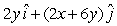
The electric potential in a region of space is given by V = 2xy + 3y2 in units of V.The electric field,in V/m,in this region is


A) The electric potential in a region of space is given by V = 2xy + 3y<sup>2</sup> in units of V.The electric field,in V/m,in this region is A)    B)    C)    D)    E) none of the above
B) The electric potential in a region of space is given by V = 2xy + 3y<sup>2</sup> in units of V.The electric field,in V/m,in this region is A)    B)    C)    D)    E) none of the above
C) The electric potential in a region of space is given by V = 2xy + 3y<sup>2</sup> in units of V.The electric field,in V/m,in this region is A)    B)    C)    D)    E) none of the above
D) The electric potential in a region of space is given by V = 2xy + 3y<sup>2</sup> in units of V.The electric field,in V/m,in this region is A)    B)    C)    D)    E) none of the above
E) none of the above

F) A) and E)
G) A) and D)

Correct Answer

verifed

verified

Dielectric breakdown occurs in the air at an electric field strength of Emax = 3.0 106 V/m.If the maximum potential at the surface of a spherical conductor is 5.0 106 V,then calculate the radius of the sphere.


A) 0.60 m
B) 1.3 m
C) 1.7 m
D) 0.77 m
E) 15 m

F) A) and E)
G) C) and D)

Correct Answer

verifed

verified

Showing 41 - 60 of 87

Related Exams

Show Answer