A) A
B) B
C) C
D) D
F) C) and D)
Correct Answer

verified
Correct Answer
verified
A) must be included in the diet.
B) contains no sulfur.
C) occurs in all types of proteins.
D) is necessary for vitamin production.
E) the body can synthesize.
G) B) and D)
Correct Answer
verified
Correct Answer
verified
A) phosphate, sugar, amino acid
B) amino acid, nitrogen-containing base, sugar
C) carboxylic acid, sugar, protein
D) phosphate, nitrogen-containing base, sugar
E) sugar, amino acid, protein
G) A) and E)
Correct Answer
verified
Correct Answer
verified
A) A repeating unit that contains an asymmetric carbon
B) A repeating unit that contains a double bond
C) A repeating unit that contains a triple bond
D) A repeating unit that contains an aromatic hydrocarbon
E) A repeating unit that contains an atom other than carbon
G) A) and B)
Correct Answer
verified
Correct Answer
verified
A) carboxylic acids and alkenes.
B) amines and alcohols.
C) alcohols and carboxylic acids.
D) amines and carboxylic acids.
E) alkenes and amines.
G) A) and B)
Correct Answer
verified
Correct Answer
verified
A) a polysaccharide.
B) a saturated ester of glycerol.
C) one of the units making up a nucleic acid.
D) a polymer of amino acids.
E) an aromatic hydrocarbon.
G) A) and B)
Correct Answer
verified
Correct Answer
verified
B) False
Correct Answer
verified
Correct Answer
verified
A) A
B) B
C) C
D) D
F) C) and D)
Correct Answer
verified
Correct Answer
verified
A) 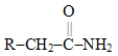
B) R-CH2-NH2
C) 
D) 
F) All of the above
Correct Answer
verified
Correct Answer
verified
A) A
B) B
C) C
D) D
E) E
G) B) and D)
Correct Answer
verified
Correct Answer
verified
A) 
B) (CH2=CHCN) n
C) (CH2=CH=CN) n
D) 
F) B) and D)
Correct Answer
verified
Correct Answer
verified
A) polybutylene.
B) polyvinyl chloride.
C) polypropylene.
D) polystyrene.
E) polyethylene.
G) A) and D)
Correct Answer
verified
Correct Answer
verified
A) The binding of oxygen to Fe2+ in the first heme pulls the iron ion into the porphyrin ring, decreasing the affinity for the second oxygen.
B) The binding of oxygen to Fe2+ in the first heme pushes the iron ion out of the porphyrin ring, decreasing the affinity for the second oxygen.
C) The binding of oxygen to Fe2+ in the first heme pulls the iron ion into the porphyrin ring, increasing the affinity for the second oxygen.
D) The binding of oxygen to Fe2+ in the first heme pushes the iron ion out of the porphyrin ring, increasing the affinity for the second oxygen.
E) Oxygen does not bind to deoxyhemoglobin.
G) B) and E)
Correct Answer
verified
Correct Answer
verified
A) one amino group and one amide group.
B) two amino groups and one carboxylic acid group.
C) one hydroxyl group and one methyl group.
D) one carboxylic acid group and one amino group.
E) one methyl group and one amide group.
G) A) and D)
Correct Answer
verified
Correct Answer
verified
A) A
B) B
C) C
D) D
E) E
G) All of the above
Correct Answer
verified
Correct Answer
verified
A) I only
B) II only
C) I and II
D) None of the above
F) A) and C)
Correct Answer
verified
Correct Answer
verified
A) deoxyribose and thymine
B) ribose and deoxyribose
C) ribose and uracil
D) uracil and thymine
E) ribose and thymine
G) A) and D)
Correct Answer
verified
Correct Answer
verified
A) PVC
B) nylon
C) Teflon
D) Plexiglas
E) neoprene
G) A) and D)
Correct Answer
verified
Correct Answer
verified
A) adenine
B) cytosine
C) guanine
D) thymine
E) uracil
G) A) and D)
Correct Answer
verified
Correct Answer
verified
A) acetic acid
B) glucose
C) adenine
D) ribose
E) water
G) B) and D)
Correct Answer
verified
Correct Answer
verified
Showing 21 - 40 of 50
Related Exams