A) 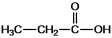
B) 
C) 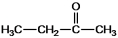
D) 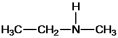
E) 
G) A) and C)
Correct Answer

verified
Correct Answer
verified
Correct Answer
verified
In metals, the conduction and valence ba...View Answer
Correct Answer
verified
View Answer
A) (CH3) 3N
B)
CH3  O
O CH3
CH3
C)
CH3CH2  OH
OH
D)
CH3CH2  F
F
E) HI
G) B) and C)
Correct Answer
verified
Correct Answer
verified
A) 1
B) 2
C) 3
D) 4
E) 10
G) B) and C)
Correct Answer
verified
Correct Answer
verified
A) The coordination number of atoms in hcp and fcc structures is 12.
B) The coordination number of atoms in simple cubic structures is 6.
C) The coordination number of atoms in bcc structures is 8.
D) A bcc structure has a higher packing efficiency than a simple cubic structure.
E) A bcc structure has a higher packing efficiency than a fcc structure.
G) A) and D)
Correct Answer
verified
Correct Answer
verified
B) False
Correct Answer
verified
Correct Answer
verified
Correct Answer
verified
a. The compound must contain hydrogen bo...View Answer
Correct Answer
verified
View Answer
A) intrinsic semiconductor.
B) p-type semiconductor.
C) n-type semiconductor.
D) p-n junction.
E) transistor.
G) A) and B)
Correct Answer
verified
Correct Answer
verified
A) 15.6 kJ
B) 10.2 kJ
C) 5.4 kJ
D) 3.2 kJ
E) 1.6 kJ
G) A) and B)
Correct Answer
verified
Correct Answer
verified
A) 3
B) 4
C) 6
D) 8
E) 12
G) None of the above
Correct Answer
verified
Correct Answer
verified
A) nematic
B) cholesteric
C) smectic
D) isotropic
E) elastic
G) A) and B)
Correct Answer
verified
Correct Answer
verified
A) Solid xenon has a higher density than liquid xenon.
B) Solid xenon has the same density as liquid xenon.
C) The phase diagram cannot be used to predict which phase of xenon is denser.
D) Freezing xenon is an endothermic process.
E) None of these choices is correct.
G) C) and D)
Correct Answer
verified
Correct Answer
verified
A) 5.5 kJ
B) 6.3 kJ
C) 39 kJ
D) 340 kJ
E) 590 kJ
G) All of the above
Correct Answer
verified
Correct Answer
verified
A) Ek(40 C) < Ek(20 C) ; Ep(40 C) Ep(20 C)
B) Ek(40 C) > Ek(20 C) ; Ep(40 C) Ep(20 C)
C) Ep(40 C) < Ep(20 C) ; Ek(40 C) Ek(20 C)
D) Ep(40 C) > Ep(20 C) ; Ek(40 C) Ek(20 C)
E) Ep(40 C) > Ep(20 C) ; Ek(40 C) > Ek(20 C)
G) A) and B)
Correct Answer
verified
Correct Answer
verified
A) hydrogen bonding only.
B) hydrogen bonding and dispersion forces.
C) dipole-dipole forces only.
D) dipole-dipole and dispersion forces.
E) dispersion forces only.
G) A) and C)
Correct Answer
verified
Correct Answer
verified
A) 10.1 kJ
B) 13.1 kJ
C) 16.1 kJ
D) 45.2 kJ
E) 48.6 kJ
G) A) and D)
Correct Answer
verified
Correct Answer
verified
A) dipole-dipole forces.
B) London dispersion forces.
C) hydrogen bonding.
D) ion-dipole interactions.
E) disulfide linkages.
G) A) and E)
Correct Answer
verified
Correct Answer
verified
A) Silicon carbide has a diamond-like structure.
B) Boron nitride can exist in both diamond-like and graphite-like forms.
C) Silicon carbide can be prepared by direct reaction of silicon and carbon.
D) Superconducting ceramics present manufacturing difficulties owing to their brittleness.
E) Superconducting ceramic compounds usually incorporate cobalt in a key role.
G) A) and B)
Correct Answer
verified
Correct Answer
verified
B) False
Correct Answer
verified
Correct Answer
verified
A) Si
B) S
C) Te
D) Bi
E) Br
G) B) and D)
Correct Answer
verified
Correct Answer
verified
Showing 41 - 60 of 97
Related Exams